Science came to life in a very different way during our Grade 12 Collaborative Science Project, as students from different scientific disciplines worked together to tackle real-world challenges through creativity, collaboration and problem-solving.
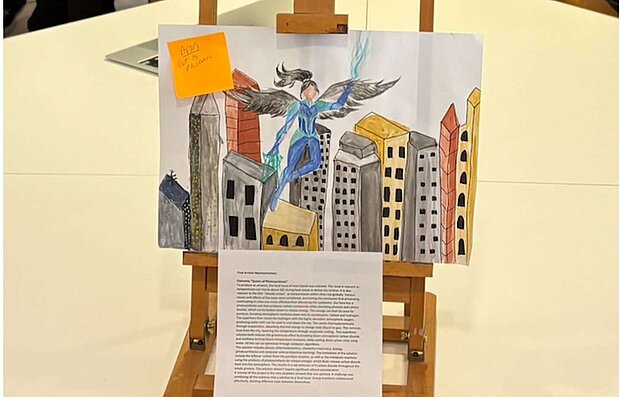
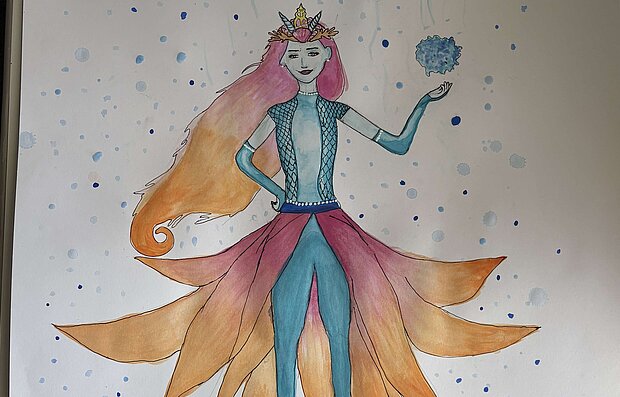
The project brought together biology, chemistry, physics and computer science, with students placed in mixed groups and challenged to design a scientifically plausible solution to a local issue connected to a global challenge. Their task was to create their own superhero, whose abilities and proposed solutions were grounded in scientific principles.
The students quickly became highly engaged in the challenge. Working in mixed teams encouraged them to bring different perspectives, skills and areas of scientific knowledge to the same problem. Rather than simply learning about science, they were asked to use science creatively – identifying problems, developing ideas, questioning whether their solutions could actually work and considering the wider impact of their proposals.
The range of ideas was both imaginative and thoughtful. Students developed solutions addressing local problems within our community while making connections to wider global challenges and the United Nations Sustainable Development Goals (SDGs). Their superheroes were not simply fictional characters; their abilities represented scientific ideas and potential solutions involving multiple disciplines.
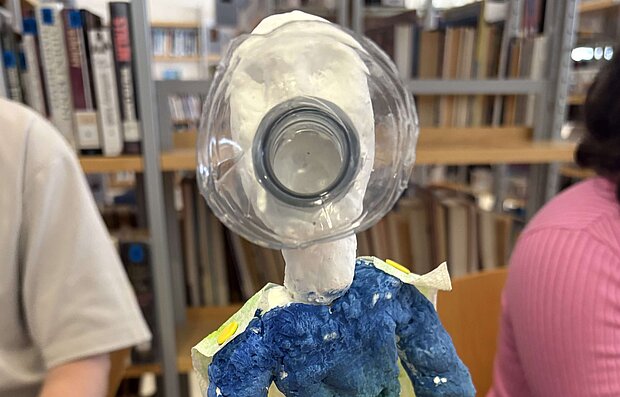
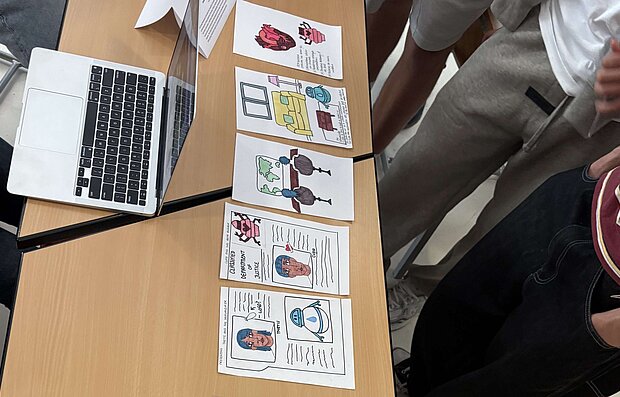
Throughout the project, students had opportunities to experiment with different ways of communicating their scientific thinking. Their final products could take the form of visual or performing arts, including paintings, sculptures, installations, theatre, film, music or dance. The artistic element provided a creative way for students to communicate complex scientific ideas to an audience.
Perhaps most importantly, students had fun while learning. The collaborative nature of the project created an atmosphere in which students could share ideas, take risks, solve problems together and learn from one another. They also had to navigate the challenges that naturally arise when working in teams, reflecting on communication, collaboration and how they could improve their approaches along the way.
The project culminated in an exhibition for Grade 10 and Grade 11 students, where the teams presented their solutions and explained the science behind their superheroes. Students shared their project aims, scientific solutions, interdisciplinary thinking, global connections and key learning with their audience.
The exhibition provided an opportunity for students to take ownership of their work and communicate their ideas beyond their own teams. It was particularly rewarding to see students confidently explain how their scientific knowledge could be applied to meaningful problems and to see the variety of solutions that emerged from the same broad challenge.
The Collaborative Science Project demonstrated that science is not confined to a laboratory or a textbook. It can be creative, collaborative and connected to the world around us. By bringing together different scientific disciplines, artistic expression and real-world problem-solving, students were able to explore not only what science can do, but also how we can use scientific thinking to respond to the challenges facing our communities and our world.
Most importantly, the project gave students an opportunity to see themselves as creative problem-solvers and collaborators, using science to imagine possibilities for the future.